Brevity. Soul. Wit.

This made me laugh.

There’s no magical length for a Tweet, but a recent report by Buddy Media revealed that Tweets shorter than 100 characters get a 17% higher engagement rate.

and

The ideal length of a Facebook post is less than 40 characters

Both of these are from an article on Buffer.com. (Buffer is a service that lets you write tweets in advance and it posts them to a schedule you specifiy. I’ve started using it on Fridays for when my personal blog, Self Distract, goes up. I’ll write the first tweet about it live but I’re recently used Buffer for the other times I mention it, specifically around lunchtime and early evening on Fridays – because otherwise I often forget.)

I have no reason to doubt or suspect or really in any meaningful or statistical way do anything but completely believe this information about writing short tweets and updates.

I am just humanly incapable of ever doing it. I see writing as our getting to talk, me and you, not as some trigger to get a reaction from you. Let alone to get 17% more of a reaction.

Plus I wish places would stop calling things scientific when they mean statistical.

But on the one hand, maybe you care about this detail more than I do, in which case I want you to see the full feature on Buffer.com. And on the other hand, maybe you like my Brevity – Soul – Wit headline as much as do. In which case I want you to see the Royal Shakespeare Company mug that has it written on.

keyboard+with+mug

See? Nobody has a writing process

Well, maybe that’s putting it strongly. But earlier in the week I mentioned how one writer I know has been trying to find her own process, to find how she works best. And how then by chance another writer I know blogged about how there is no such thing as one process that we can all adopt.

That friend, Ken Armstrong, refers to how there is a belief that creative people must work to a certain pattern yet he doesn’t agree with that. Now Casey N Cep of Pacific Standard says of this that:

Charles Dickens wrote while blindfolded. Virginia Woolf took three baths a day, and always with ice-cold water. Stephen King eats a blood orange at every meal whenever he is working on a book. Joyce Carol Oates writes only in Comic Sans.

None of those things is true. Before you go and stock your kitchen with blood oranges or switch the font on your word processor, let me assure you that I invented every one of those writerly habits. But what if I hadn’t? What if you had read them in an interview or in any one of the million aggregations of writerly routines? Would you really stop taking hot showers or start blindfolding yourself when you write?

The Myth of the Artist’s Creative Routine

Yes.

I’d do anything.

In particular, I would do anything rather than write. Hot showers balancing an orange on your throat? Easier than writing. Give me a list of habits I must adopt and I’m happy.

The idea that any one of these habits can be isolated from the entirety of the writer’s life and made into a template for the rest of us is nonsense. What none of these lists tell you is that sometimes these highly creative people weren’t waking so early on their own, but were woken by domestic servants. Or that some of these highly productive writers also had spouses or children or assistants enlisted in the effort. Or that often the leisurely patterns of drafting and revising were possible only because generous familial support made the financial demands of everyday life irrelevant.

Read the full piece for more.

LaunchCentre Pro masterclass on MacStories

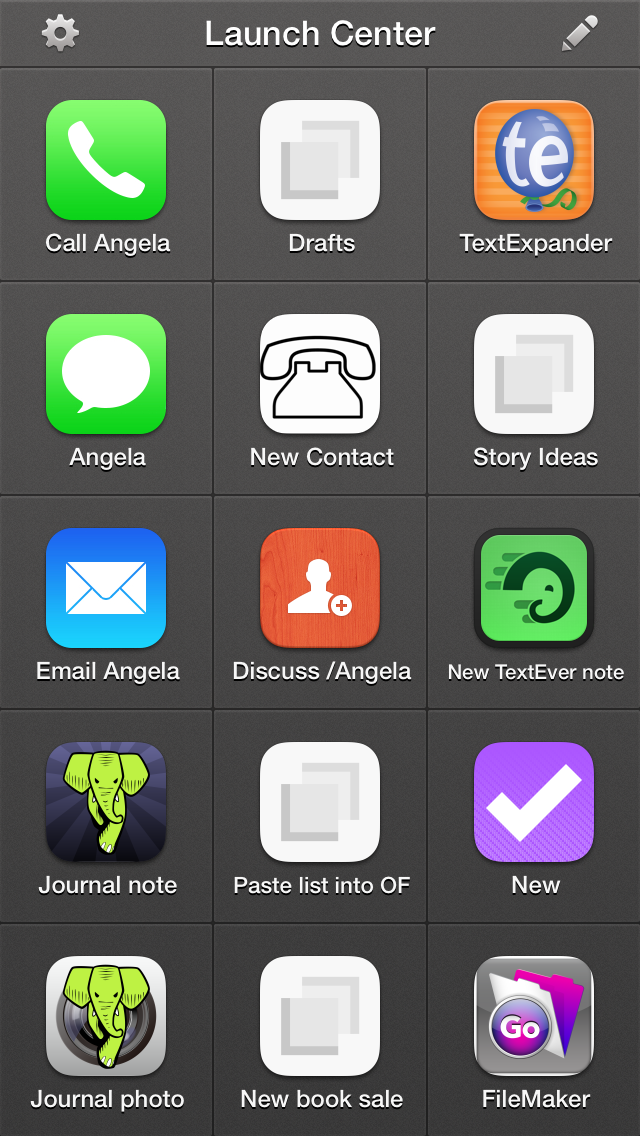
Imagine that you could have one button on your iPhone that, say, opens OmniFocus and goes straight to entering a new task. Or one button that dials your mother. Send a description of a meeting to Fantastical in one tap.

lcp

And then imagine that it’s faster to just go to OmniFocus yourself, or to tap on your mother’s name or to start typing directly in Fantastical.

That’s what happened to me. LaunchCentre Pro does all this one-button lark and it is very impressive but it takes two buttons. One to launch LaunchCentre Pro and then one to do the thing you want. As fast as it is, as clever as it is, that’s two taps and I was finding that it is quicker to things directly.

Consequently LaunchCentre Pro vanished off my home screen.

But it comes back each time there’s a new version and each time someone finds a vastly cleverer use for it than I ever came up with. Now, MacStories has come up with a more comprehensive guide to using this thing than even the makers do.

I know I sound down on LaunchCentre Pro but I like the idea and it is cycling round to my homescreen again. I do still keep Drafts on there, which is a text editor that has similar functions and that can work well with LaunchCentre Pro. So I may be down on it, but I’d like you to be up on it so you can see for yourself. Read this first and very comprehensive guide.

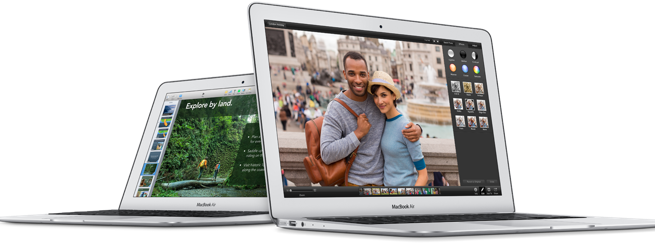
New: MacBook Airs now from £749

macbook-air-hero-l-201404


[Photo: Apple]

Give Apple credit: anyone else would be doing a big launch presentation about this but they just slipped it out with a press release and an updated website. And I’m kind of with them: there’s nothing new per se in these models. But it’s a lot of years since I gave much of a damn about a 1 pixel improvement or a 1 microhertz speed improvement, I am all for what you can do with computers.

And how much it costs you to do it.

That’s the news today: the new MacBook Airs are starting at £749. If you’re a PC user who has often spent no more than thruppence on a computer, you’ve just winced and I am just about to point out that you spent that thruppence often. Often. And added bits. Whereas I updated my Mac after six years solid, heavy use – and I still use that one for some jobs.

Spend your money wisely, spend it here – and remember when MacBook Airs came sliding out of manilla envelopes and were the most expensive things in the world ever:.

New: Clear To Do app adds Reminders

This just in from Realmac:

…we’ve just launched a big (and much-requested) feature in Clear for Mac and iOS: reminders. With this great new feature, you’ll never forget a to-do – and as Clear syncs your tasks and reminders via iCloud you’ll be notified on all your Apple devices.

We’ve also got some new sound packs in Clear so you can customise the sounds as you complete tasks.

Clear with Reminders is of course a free update, and available on the App Store and Mac App Store.

Clear has always looked great yet not been powerful enough for me and in part that’s been because of the lack of reminders. Take a look at Realmac’s Clear website for a video of how this latest version works.

Dear [INSERT NAME HERE] your email is very important to us

Let me say this. I don’t agree with the article I’m about to point you to. The quick summary of it is that it says you should cope with your emails by emailing people back with stock responses that effectively say you’ll get to them later.

I think this is bad for several reasons:

  • I abhor stock responses – I’m a writer, I don’t do stock responses
  • It means you are staying on email just to send these
  • When you email these people back immediately, they are likely to respond right away
  • It just adds to the number of bleedin’ emails flying around. And I like emails

Instead, I would offer that the solution to not being overwhelmed by email, to not losing your working day to writing replies, is to not check email every minute. Do it once an hour at most. Then when you get an email, if you can handle it right away, handle it right away. No postponement, just get on with it. If you can’t and you must respond, then, okay, send them a reply saying that you’re on the case. But don’t make it a stock, canned, cookie-cutter response.

The always excellent 99U site takes the opposite view and says stock, can, cookie is the way to go. See what you think – and if you agree with 99U, you’ll find such recommended stock cans in the article.

Go away. Far as you can.

I went to a Catholic school and I think every kid there was Irish Descent. That’s how I thought of it: capped up, Irish Descent. Like that was a thing, a statehood, a nationhood, like Irish or English or American, I was and we were Irish Descent. Then I went to college and nobody was.

Nobody else was.

They weren’t Irish Descent, they weren’t Irish and nobody was Catholic. It was wonderful. I can feel my eyes opening as I tell you this. To go from one familiar situation like my school to the unfamiliar one of a college. To go to a situation with the promise of so much being unfamiliar, so much being new and different. I basked in that and I’d say that I learnt more from the experience than from the lectures, except that’s far too easy a thing to say. You should’ve seen the lectures.

You know all this. You know that going away is good for you. Now Time magazine reports that:

Research shows that experience in other countries makes us more flexible, creative, and complex thinkers.

How does studying or working abroad change you? You return with a photo album full of memories and a suitcase full of souvenirs, sure. But you may also come back from your time in another country with an ability to think more complexly and creatively—and you may be professionally more successful as a result.

These are the conclusions of a growing body of research on the effects of study- and work-abroad experiences. For example: A study led by William Maddux, an associate professor of organizational behavior at INSEAD, found that among students enrolled in an international MBA program, their “multicultural engagement”—the extent to which they adapted to and learned about new cultures—predicted how “integratively complex” their thinking became.

How Studying or Working Abroad Makes You Smarter – Time

Before we go too far down this line, I need to tell you that copying-and-pasting that segment out for you also brought along a Recommended headline which was this:

Kate Middleton plays volleyball… in heels

If you’re thinking that were one even to accept the concept that this might be news, the entire story is there in the headline, you’re right. The headline just links out to a video. Want the link? The things I do for you.

Anyway. Time magazine, eh? I do still have it in my RSS feed and it regularly has features I enjoy. Including this one about studying and working abroad.  Take a look at the whole feature: there’s not much more to it than I’ve quoted but it has links out to the research it reports on.

10 PRINT “HELLO, WORLD” GOTO 10

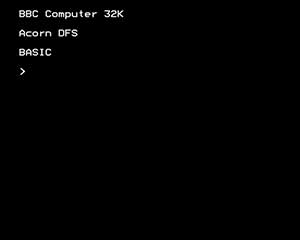
It’s fifty years since the computer language BASIC was invented and probably thirty since I could’ve told you unprompted that it stands for Beginners’ All-purpose Symbolic Instruction Code. I’m not sure how many years it is since this was the startup screen I saw for most hours of most days:


bbcmicrocursor


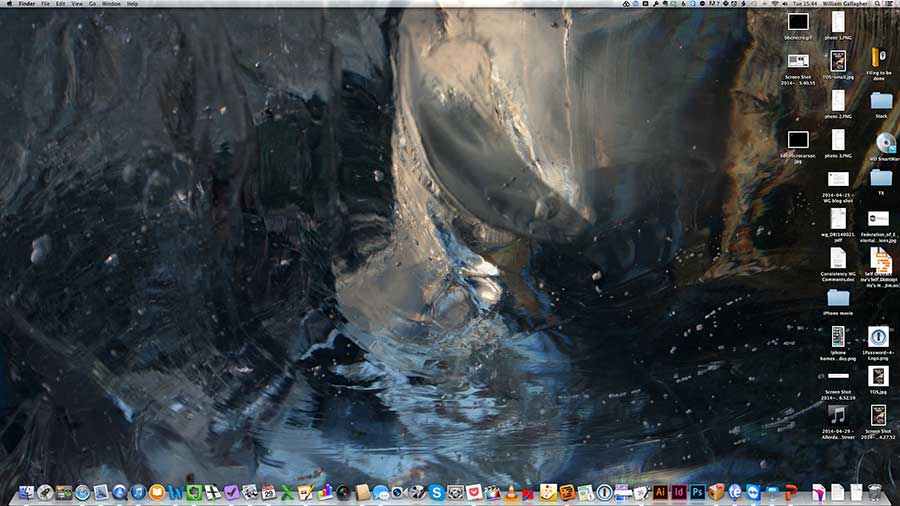
It’s hard to conceive how we got from that to what I now see every day:

macdesktop

But we got there in part, in a very big part, through the impact of BASIC and the generation it sent into programming computers. I was one of them, I just got in trouble for always wanting to add in plot twists.

Read the origins and history of BASIC in Time magazine. Told you Time was good for a read, when it isn’t running royal videos.