Sandy Glasser owns a cheese shop

The things you find online. This is my school photograph from thirty years ago and if you’re now peering to see which one is me, imagine how I felt coming across it this week on Facebook. By accident.

I don’t remember the day this was taken but I do very clearly, very physically remember this photograph: the copy I got then was a print in a brown cardboard sleeve. Seeing this shot online, that was my first reaction. Surprise came second, looking for me came third, I was hit first by the feel of that old print in my hands.

I do remember that on this day or one around it, the headmaster in the front row did some speech or other in which he said there was a song that summed up how we must all be feeling as we reached the end of our school days. He was a very hip headmaster so it was probably something like The Old Rugged Cross.

But I do recall turning to whoever was next to me and – in a display of contemporary pop music unusual for me at the time and unheard of since – whispering that he must mean Captain Sensible and Glad It’s All Over.

Can’t remember who I said it to. I look at this photo and I can name just ten and a half people. It wasn’t a great school, I wasn’t a great pupil, all it really did was knock a child’s automatic respect for authority out of me. I remember my chemistry teacher spending a whole lesson on getting us to mark another class’s homework. He stood at the top of the lab and said what the right answers were supposed to be while we were meant to tick or cross and report back the final score. I’ve no idea whose exercise book I marked, I don’t remember now and I didn’t care then, I just went straight to the end and gave the kid 10/10. What was that teacher going to do about it?

Another teacher did try something on: he worked hard to get me thrown out. I worked harder to stay in. I won. It was an entirely unwarranted move on his part, he was actually heading for a breakdown and was causing much damage to perhaps one kid per class year. But it was the first time I remember where I had to get really political, to think around and over someone playing the rules against me.

Oooh, it’s all coming back. That politics did help me in journalism, I’ll give the school that. But the last thing I remember about the place was how wrong the careers advice was. If I could figure out the name of the careers teacher who laughed in my face about my becoming a writer, I would not be above going back to him now. But I’m drawing a complete blank.

Blank on him, blank on all the teachers in that photo, blank on so many more people in there. I do remember who I fancied. I hadn’t remembered quite how many there were. That’s embarrassing now. I expect it was embarrassing then, too.

I only remember asking one woman out, I’m certain I didn’t actually go with any one there. Nobody in that picture. Grief, I hope I’m right about that. Or at least, if I’m wrong, that she isn’t reading this.

What are the odds, though? I sent a copy of this photo to one of maybe two and a half people in it that I still know. Jim McCarthy: second row of pupils from the back, right hand side of the photo, standing between Thingy and Er.

Jim is much better at remembering everyone, he really put me to shame there. But he also vocalised something I hadn’t realised I was thinking: the fact that whether or not you can name any face in that shot, we ourselves are unrecognisable. Or rather, we are unrecognisable to ourselves. I look at me there and I’m alien. Lifetimes and worlds ago. I prefer the me of today to the me of then. I know that the me of then would be very happy with where I’d ended up so far, but I hope he would also have told me to bloody well get there faster than I did.

I hope so, but I’m guessing. I don’t know that William Gallagher any better than I know Thingy, Er, and Whatsherface.

After I found me in that shot, after I found Jim, after I got bored trying to recognise many others, I did find Whatsherface, the woman I remember asking out. That was so strange: an instant, a picosecond before I found her, I thought of her and expected to feel – I don’t know, rejected of course, probably daft. I did like her enough at the time that she would make me tongue-tied. If anyone in that shot remembers me as an eejit, well, hey, it’s nice to be remembered and it’s impressive that they remember me so accurately. She cannot remember me accurately because I was entirely a different kind of eejit in front of her. It’s not really a difference that makes much difference, but it makes much difference to me.

Only, even if she knew me as eejit, it was also a pretty shallow kind of knowledge. She didn’t know me well, I didn’t know her well. It was a pretty temporary knowledge too: I am not the boy I was. Doubtlessly she’s not the woman she was. So here’s someone I didn’t know then and I don’t know now, but she’s fixed in my head as the 17-year-old she was in that photo.

Lots of writers swear by the idea of creating the young character in their heads before begin writing. What music did they like, what posters did they have on their wall, who did they have a crush on, what was their best subject. I have always found this notion stupefying and believed it only an excuse to postpone writing. Ask me after I’ve done a script and I can probably answer all those questions immediately: I know the characters so well by then. But at the start, I’ve not a clue and I have never believed that it tells me anything.

I suspect now that I believe this because I unthinkingly knew of this schism between the me of then and the me of today. I get the whole nature vs nurture argument, I know you’re thinking that the me of today was formed by the me back then, but it feels like I have several walls between the two of me.

I’m happy being this side of them all. But just for a moment, it was nice to peek back.

Spam is maps spelt backwards

I have this secret email account. Big, big secret. Even you don’t know the address. I’ve never signed up to anywhere with it, I’ve never included it on a form, I have denied its very existence. But it’s there. And spam finds it anyway.

Well, it does and it doesn’t. It’s a gmail account and I’ve been using it since 2004 solely as a writing archive. When I finish a piece or a good-sized chunk of it, I obviously save it and back up too but I also email it to myself. Specifically this: I email it from that secret account to that secret account.

If I email it from anywhere else, if you squirrel out the address and email it yourself, or if anyone tries to send it spam, I will never know. Well, I might figure out the one where it’s me emailing. But the archive remains pristine and untouched by anything except writing attachments because everything else is immediately deleted. I don’t see a bean of it, it’s just toast straight away.

It’s been great except that as it’s a gmail account, when I wanted to join Google+ I thought I either had to reveal this address or make a new one. I made a new one. You can well believe how tedious it was having to repeatedly log out of one and into the other, to remember which was which and where you were. But then I found that even with my new gmail address, even with me on Google+, I was getting a lot of people inviting me to join the service – and they were inviting me by my Secret Address.

Hopefully I just wigged out some time in the last eight years and let this address slip but even if that’s the case and it’s not that Google was toying with me, the result was that I did not see one of these invitations. How could I? Instant toast.

Some people got annoyed with me never responding. This is how I found out. By then, though, the number of invitations to join and the idea of having to go through all of them saying I already had, I just skipped the lot. Haven’t been back to Google+ since.

And I haven’t looked in the toast bin since, either.

Until this week.

This week I’ve been doing a thing and a friend has been helping me out and somehow, somewhen, she got my Secret Email Address instead of my real one. I don’t know why, she doesn’t know why, it doesn’t matter and she mentioned on Facebook that she’d emailed thisaway so I knew about it.

But nipping into my gmail trash to get her email, I think I’ve found where all human life is hiding.

So much spam. If you get spam all the time then you’re shrugging at me now but my real address gets practically none. It gets so little that when one gets through, it’s maddening. And here was a flood of the stuff to an address I believed no one had. There’s plenty of evidence to say I must’ve given it out some time, but very intriguingly some of the spam has been sent to email addresses that are almost but not quite my secret one.

I forwarded my friend’s email, then deleted everything in the trash and waited.

When I checked back the next morning, there were ninety new messages and together they told the story of a life. I’ve not edited these, I may have nudged the order on one or two and I’ve dropped a lot of duplicates. A lot of duplicates. But where spam used to be Viagra and Rolex watches and Nigerian bank fraud, now it’s a story:

Supercharge and impress girls

Start a Relationship with Your Faith in Common – Find God’s Match for you

Buy a High School Diploma and University Degree NOW

Learn the skills that could let you be the first to see a baby

You have been selected to be on Deal or No Deal

Meet 40 plus Singles Near You. Browse profiles FREE!

Looking to cast a personal love spell?

Lose 20lbs quickly and safely

Compare and save on spy cameras

Get new windows

Injured? Get the compensation you deserve

William, do you need emergency cash?

View Photos of 50+ Singles in your City

An Ex Has Recently Searched for You

We all hate spam, but it’s out there everyday, creating fiction. Or at least creating outlines for stories: spam can be a map of a character’s entire life. I think the story you read just there is really mostly inside your head. But that means you wrote it, the spam outlined it, I just retyped the thing. I’ve gone off this whole idea now.

I swear

Actually, I don’t. I just don’t tend to swear. No reason. I’m not prudish. I don’t object if you cuss your head off – oh! I suddenly, right this moment, remember an old friend stopping in a conversation to apologise to me for her swearing. And I remember most clearly that I hadn’t a clue what she meant.

I’m not saying that I never swear. I have absolutely no doubt that if you searched every blog entry I’ve written here in the last few years, you would find the word ‘fuck’. There it is. Right there. Look at me: I’m so nice I even saved you the search.

Maybe that’s it, maybe I’m just so nice, maybe that’s the whole thing. Though there is a fella who I bellowed at over the phone this week who would disagree. And a woman who called last night claiming that Microsoft had asked her to phone me about a severe problem with my Windows PC which I could fix by browsing to her malware-infested website, she heard the word ‘bollocks’ quite quickly.

There aren’t many people I don’t like, there aren’t all that many things you can do that will bother me. There aren’t many things that I’m not interested in. It’s a happy life.

And it stinks for when you’re trying to write realistic characters in drama.

I actually think this is the root of it all: I grew up in a polite family, yes, but I also grew up in front of the telly. Lou Grant never swore. Nor did Bob Hope. Actually, I blame Bob Hope films for how my accent became – well, it’s not mid-Atlantic, but it’s never been spot-on Brummie either.

(A quick aside? I just wrote a feature on the ten films that most shaped me and Angela guessed that the Road movies would be in there. They weren’t, but they could so easily have been and all because of the  line in The Road to Morocco which goes “Like Webster’s International Dictionary, we’re Morocco-bound”.)

The Road to Morocco was 1942. Seventy years ago. We are living in an age when something made seven decades ago can be seen an enjoyed pretty much exactly as it was when new. Yes, we now see it on iPads and it has become a snapshot of a culture and a time that it once just fitted into and reflected.

Howay. I am plainly destined to never write searing social justice horror movies that are as profane as they are profound. I’m okay with that.

But it makes me conscious that there are really three types of dialogue, not two. I used to think there was good and bad. Or call it believable and unbelievable. Realistic and not realistic.

I hope that if I write a line it is realistic, that an actor can say it, that it just works. It probably won’t have swearing. Again, not from some deliberate avoidance, it just probably won’t. But that does mean it’s unrealistic.

So I’m writing dialogue that may be good and believable, but it isn’t real.

Not to compare myself to these incredible writers, but this is a key part of the work of Alan Bennett, Harold Pinter, Alan Plater, Tom Stoppard – and Aaron Sorkin.

Aaron Sorkin’s The Newsroom has been praised for the verve and brilliance of its dialogue – and it’s been slammed for its unbelievable dialogue. What I think both sides are missing is that it isn’t real, it is extremely stylised writing and at its best, it’s wonderful. Gigantic conversations happen in three lines, two of which have nothing to do with the subject at heart. People speak with passion and energy and it is uplifting.

I don’t care that it isn’t real, that none of us will ever meet a Will McAvoy (Jeff Daniels) character in real life.

I do mind very much that we have already met a Will McAvoy character in most of Aaron Sorkin’s work before.

It ticked me off in Studio 60 when Matt (Matthew Perry) accidentally broke an office window because I’d seen Will Bailey (Joshua Malina) do it in The West Wing and Malina was in Sports Night when Dana (Felicity Huffman) did it there. Similarly, The Newsroom has McAvoy comically unable to remember a character’s name; just as Jed Bartlett had problems with it, just as Sam Donovan did before him.

Things stop illuminating a character when they first have to shine a light through two or three other characters before them. Every writer reuses ideas or maybe even lines as they explore the same themes – though me, not so much – and sometimes it’s a running gag for the audience to spot. (Watch an Alan Plater piece and you’ll likely as not hear someone ponder whether they can make it to the Mexican border by nightfall.)

I think things don’t have to be realistic in order to be realistic. Switching the light off with those preceding characters and looking just at The Newsroom’s McAvoy, he talks in a way that perhaps you’d want to but none of us do. When it works, it’s wonderful. But the price of it all is that sometimes it doesn’t work.

If memory serves, there wasn’t a moment in Sports Night when the dialogue didn’t work. Definitely not in The West Wing. I remember Studio 60 having comedy sketches that weren’t funny but otherwise, the characters all worked. But in The Newsroom, it does sometimes fail.

Martin Sheen has said many times that it took him a while to get Aaron Sorkin’s lines and to deliver them right. Sam Waterson doesn’t seem to have got there. Emily Mortimer often doesn’t land the lines. These are terrific actors but they didn’t pull this off. To just underline the difficulty, there was a minor character in the Newsroom pilot who tortured a line about people having a personal argument in front of him.

The Newsroom is delicate. It’s making a similar mistake to Studio 60 in setting up rivalries but instantly pricking them apart. (In Studio 60, the big threat was from the network boss who could fire Amanda Peet’s character but not only was she a star, his was a very binary threat. There are no degrees of firing: his only weapon was total removal of her from the show. It was never going to happen and we knew it immediately. Within a few episodes, he was changed to being a good guy with some nasty boss above him. Exactly the same problem, just a step removed. A few episodes later, the threat was pushed off another step to being the big bad nasty FCC. If the FCC is your series enemy, your goodies are weak too. In The Newsroom, the first news story was about the BP oil rig incident so we knew instantaneously that our heroes were right to be pursuing this story and their rivals were wrong – even stupid – not to. Instantaneously. The rivals have nothing so they aren’t rivals.)

Aaron Sorkin says that during The West Wing, he wouldn’t touch a subject unless they could make very good, very strong and conflicting arguments on both sides of a topic. That’s stunningly hard to write but I believe there may never be any better drama than two people arguing where both of them are right. Swear or don’t swear, I don’t care, but when both sides of a contentious issue are articulate, passionate and right, who gives a damn whether they swear?

Mondegreen with envy

Whatever you do, there is someone in your field that you know is better than you can ever hope to be. The very fact that you’re in the same field only means that you’re even better able to appreciate the nuances of how tremendous they are and you aren’t.

Writers get this the worst, I think, because I am a writer. But it is regretfully true that we can go look up myriad examples of especially fine writing at any moment. If you’re struggling to write something, just read how vastly better someone else has already done that same idea. If you’re a dentist, it’s hard to examine the work of your heroes quite so readily, quite so quickly, and quite so without being arrested.

Whenever you do see brilliant work in your field, though, it is crippling. But the writing that is so good that it kills you is so good you don’t mind being killed.

Usually this writing is a body of work like a complete book, an entire script, a full poem. I get one of my worst give-up-now-William moments from half a line of Calypso, a Suzanne Vega song.

I bring this up now because I found out that her next album has been delayed to August. [Update: some sources now say September.] It’s the fourth of her acoustic re-working of her back catalogue. I mentioned this news on Facebook and Laura Cousins commented thisaway: “What I love about the acoustic versions is how it gives an insight into how the songs are written, and how very strong they are.”

Quite so. Absolutely. But that insight, that clarity… How can I say this?

There’s a line in Calypso, from Suzanne Vega’s Solitude Standing album, which describes a relationship with someone and goes:

I tell of nights / Where I could taste salt / And hear skin

Many, many times now, those last three words have prevented me writing. Stopped me cold. Because I know I couldn’t write that well.

It’s one of those lines that is wrong, that doesn’t actually make sense, and yet therefore is so right and actually makes so much more sense than the ‘correct’ line could. I’ve mentioned before that Dar Williams’s line “I am the others” does this to me. Both of these lines use the wrong word and that’s something I don’t think I can do yet it’s something that both these writers do so very powerfully.

I mean, she sings “and hear skin” and I can feel that relationship. You can touch skin, you can see it, you can smell it, but this is more. It’s that special person who’s just come in the room and set your heart going faster. The desire you can’t express neither in the sense of comprehend nor – God forbid – telling them. Not yet. Not now. You’ll scare them away. Better to be with them like this than risk losing them, losing everything. A hand, a wrist, an ankle and, yes, a breast, a thigh, all so shockingly real and vivid, all like lightbulbs under their clothes, not because of the body-part itself but because of whose body it is.

The tingle of their presence, the delicious pain of it, there is so much more to it than seeing or feeling or smelling. You can hear their skin: Suzanne Vega is right.

Only.

She didn’t write that line.

I misheard that lyric from 1987 when it was first released on Solitude Standing to 2010 when an acoustic version came out on her Close Up Volume 2. Wherein it is obvious – and I’ve since checked too – that what she really sings is this:

I tell of nights / Where I could taste salt / On his skin

Mondegreen means a misheard lyric. (Did you know that? I only recently learnt it while watching an interview with Ian Rankin where he revealed his latest book title is such a misheard lyric.)

I have been mishearing a lyric for nigh on a quarter of a century. There are a thousand other reasons to admire and love Vega’s work, but she didn’t write this one.

So apparently I did.

I’m still trying to process this.

If you want to check for yourself, the lyric comes about 43 seconds into the 90-second preview of Calypso and the Solitude Standing album on iTunes here. And then it’s clearer on the acoustic version from Close Up vol 2; comes about a minute into the 90-second preview on iTunes here.

By any other name

I’ve said it before and I’ll doubtlessly say it again: no sooner do you create one character for a script than you have to create a second so they have someone to talk to. What’s more, they have to have bleedin’ names.

Names are so hard. Get them right and it’s impossible to imagine the character being called anything else. Gene Hunt, for instance. But there’s right and there’s familiar: Tom Rockford sounds wrong where Jim Rockford sounds spot on yet that’s what James Garner’s character was called right up to filming of The Rockford Files. (See for yourself: here’s the pilot episode script by Stephen J Cannell, who co-created the show with Roy Huggins.)

Mind you, nobody remembers why that show was called The Rockford Files. The title referred to the type of cases that this detective character would take on: as he had been wrongly convicted and imprisoned, so he was going to investigate similar miscarriages of justice. I have no idea whether he ever did and neither do you: you just know it as an especially good detective drama with a particularly charismatic lead character.

Writers set up all these thing and we needn’t: that title was specifically about the cases he takes on but it became specifically about the series. We didn’t need Jim Rockford to take on anything other detectives didn’t, we just needed him to be who he was and to open every episode with one of those great answering machine messages.

My favourite is episode 9:

ROCKFORD’S VOICE: Hello, this is Jim Rockford. At the tone, leave your name and message, I’ll get back to you.

BEEEEEEEEEP

CALLER: This is the message phone company. I see you’re using our unit, now how about paying for it?

Lots of writers spend a lot of time thinking about names. Some like their names to say something very specific about their character: Squire Allworthy is unlikely to be a right git in Tom Jones for instance. You can go far with this, viz Basil Exposition in Austin Powers.

I’m not that keen on meaningful names. I blame the parents.

But it means I’m left pondering names an awful lot. I will confess now that I used to cheat: I came up with the name Susan Hare for an early script and I thought for a long time that I would keep on using that name until one of those scripts sold. So Susan was an international jewel thief, a journalist, a 12-year-old kid, a banker and a baker, countless different things that were incompatible in age if nothing else. Only, I then realised I was writing new characters with her name in such a way that you could make all the versions fit together into one remarkable life.

I stopped. But not until after I’d used her name in a little experiment on an online service (where I gave her and a barely-intelligible male character the same computer problems to see who would help out who). And not until after I’d created a Facebook page for her. The photograph above is a version of her profile picture: I came around a corner in Cardiff Bay and saw this lonely image. By the time I’d taken that shot and tried to talk to the woman, she had vanished. So I do think of her now as Susan Hare.

I’ve lost the password to Susan’s account and it’s like she’s alive out there without me. It was her birthday the other day. She has more friends than I do. Two people I would’ve said were my friends started fighting over her.

That’s what I call a successful character name.

But what’s got me thinking about this today and wanting to talk to you about it now is not how you name characters but how you name products. Apple has just released a new free iOS app called Podcasts. You immediately know what it’s for.

The word ‘podcast’, though, is of course formed from two words: iPod and broadcast. It’s a mark of a successful product when podcasts have outlived iPods.

Maybe that success has inspired other names; maybe it’s all a coincidence that every product name is now a compound of two words. Maybe I’m only seeing this now because I’m looking for it, a la confirmation bias.

But look at the products that new Apple app is going to compete with. Instacast is the biggie: I have this and occasionally use it – remarkably occasionally since I used to produce my own podcast with UK DVD Review – and again the origin of the name is obvious. Instant podcasts. Fine.

Only, if you’re going to name something from two words, I think it behooves you to think both of what the two separate words mean and what the new compound word does too. Follow: another app for the downloading of podcasts is called Downcast.

They didn’t think that through, did they?

But at least it’s better than this. There is a clearly high-profile and apparently successful iOS app for iPad and iPhone which lets you sketch things. It’s meant to be for creating artwork and the makers would have you regard it as a highly professional piece of software. I’ve seen countless reviews of this product, none of which have appeared to notice that the name ought to have been worked on one more time.

It’s called Procreate.

What’s it about? Uh-huh. And what’s it really about?

I’ve been having a slightly anxious time on a script. Can’t tell you what it is yet but it’s a commission that came up quite quickly and unexpectedly; it’s a project that has to be completed quite fast. I like all this, it suits the way I work, it takes all my newsroom training and applies it to drama – and it means I’ve less time to fret.

Let me tell you right now, most especially if you’re currently wondering whether it’s the script for you that I’m talking about, it’s going fine again. Brilliantly. Flying. In fact, you could stop reading now.

Have they gone? Is it just you and me again?

Sometimes it does fly. I had a problem on it that cost me a day but when I realised the solution, it was so clever I patted myself on the back. And as I contorted around in my chair to do that, I also realised that the clever solution came with a free “oooooooh” moment thrown in. I told Angela. “Ooooooooh, ” she said.

Other times it’s not flying. But I’ve realised why and actually now, here, setting out to talk to you about this, I’ve realised that the reason is deeper than the script, it’s also tied into how my work has changed so much and so quickly. It’s terrific that I am now writing drama and books but it’s very different from just being assigned another feature to do.

Here’s the thing. When I pitch you a script, I start by telling you what it’s about. But as soon as we can, we move on to what it’s really about.

Follow. My first Doctor Who was a short 25-minute piece that was about the Doctor being stuck in prison. It was really about how I think time itself is a prison; this idea I’ve said to you before about how we are trapped here and the very best we can ever hope to do is to bang on the pipes a bit to pass a message along.

You don’t need to know that when you read the script or hear the finished drama. In some ways, it might not even be in there in finished work: certainly it will never be stated or in any way emphasised. But without it, the script is a plot. With it, it’s a story.

So this blog is about how scripts need to have more in them than plot. How they have to have something of you in them or they just don’t work.

But what this blog is really about is my move from journalism to drama.

I say all this to you about plot and theme and it feels a bit arty-farty, to be honest. I am of the get-it-done school, the park your bum at the desk and write until it’s finished. That has served me extremely well in journalism where I’m productive and fast enough that things get written and then I’m fast enough and not so precious that I can change things rapidly too. I don’t believe in the Muse.

Well, I didn’t. And if you tell me a great male artist had to have a woman around as his Muse, I still think he was just trying to impress her and I’m far more interested in what she does than I am in his poncing about.

But Aaron Sorkin said this glorious, liberating thing the other day. He’s working on a biopic of Apple’s Steve Jobs and said: “I’m at the earliest possible stage… What I’ll go through is a long period that, to the casual observer, might very well look like watching ESPN.”

Sheer air pressure propelled me out of my office when I was writing a piece called Wirrn Isle; I spent a day walking around my home city of Birmingham with my head in a futuristic Loch Lomond. It was as necessary as eating and I’d never had that before. With this new script, I’ve tried building in times like this, scheduling them rather than reaching the end of a rope before giving in to it. So yesterday I had a coffee with a guy, today I talked the ears off a water meter inspector, I’ve watched endless episodes of particularly well-written sitcom in the middle of the night.

Not endless. But I’m on my fiftieth episode of The Big Bang Theory since February. It’s not always a great show but so many times it is and the craft in those 19-21 minutes is delicious.

They do so much in that time and by contrast I’ve just spent an hour trying to find you a quote from Dar Williams about the necessity to make time for whatever you call this writing-while-not-writing. I have failed to find this quote. But in keeping with how this noodling about is an essential thing if you’re to create anything new, the search for that quote led me to another one hers that I like.

Asked by the Wall Street Journal how she gets inspiration to write, Dar Williams said: “You have to walk around a lot of museums, a lot of sculpture parks. And time your caffeine, so that you are in an open, wide contemplative space for when the caffeine takes hold.”

It’s 2pm. I forgot to have breakfast, I should probably do something about lunch now too. Drama is a weird world and it’s scaring me a little how I’m having to change to do it.

Indicing with death

Two hours ago, I finished writing my first index. Twenty years ago, I finished writing my first article about writing indexes.

That was in the March 1992 issue of Personal Computer World and as a commentary on the state of word processors at the time, it’s fine. As a read, it’s not. But I have just had a very good time re-reading it after twenty years more experience writing, after twenty years of more technology progress and of course after my first genuine need for an index.

Back then, I was testing all the very latest word processors to see how they coped with indexing a 23,000-word document. Reading between the lines, I think I believed 23,000 words was long. Mark you, I also seemed to believe that being snarky was clever and that randomly opinionated was useful.

But I did also take all these word processors with their apparently very fancy automated indexing tools and conclude that the only sensible thing to do in the real world was ignore the lot of them and hire a professional. Can you believe this, though? I gave the address of the Society of Indexers. The address. The postal address. We have come a long way since I can now just point out their website to you.

What I don’t know is whether we’ve come any further with word processors. That slightly disturbs me because word processing was my beat, so to speak, on a number of computer magazines and I’d forgotten that I used to be so interested. Naturally I wrote my book – BFI Television Classics: The Beiderbecke Affair – on a word processor so it’s not that I’m a typewriter-wielding Luddite, it’s that my interest in computers is dead. I knew that: I went on Macs around the time of that article and have never looked at a blue screen since.

That said, I did get a little twitch looking at all the software I listed in that article: I was testing and comparing away happily and obviously you say what you were testing and comparing. Two of the software applications have entirely died since then – PageMaker and FullWrite Professional – while one – Interleaf – has been mildly reborn as something else. WordPerfect for Macintosh was in there too and that’s no longer sold but WordPerfect itself limps on.

I am a little startled at my stupidity, though. I’m used to my general stupidity but this was a specific thing and it appeared to be a kind of consensus stupidity: I and the word processor manufacturers alike all unthinkingly assumed that there was any point indexing the (say) Word document. I did write my Beiderbecke book in Word but the text was typeset in some other system. (I don’t know what system but I do know the typesetters did a gorgeous job of it: I got the page proofs and they are beautiful.)

Just doing a quick che –

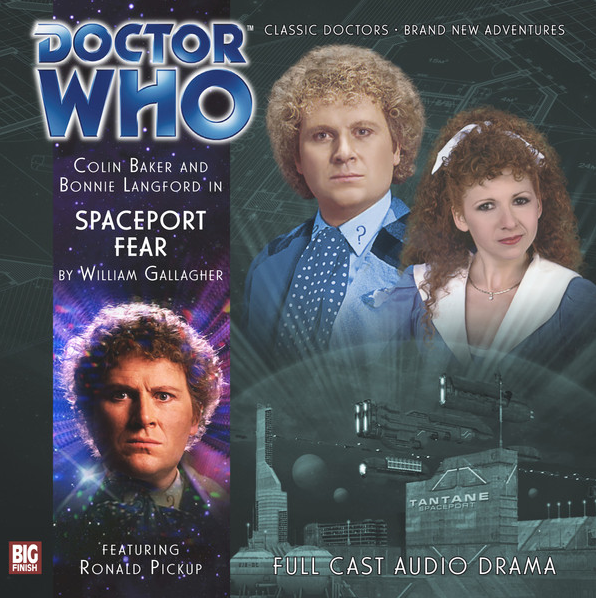
– wow. I have this minute, this second, that sentence, been sent a proof cover of the book. I can’t show you because it’s not final, it’s got lots of text on that’s for position only, but the colours are great and it is rather nice seeing my name on there. Reminds me of the Doctor Who: Wirrn Isle cover. Somehow my name goes on someone else’s artwork. That’s not bad.

What was I saying?

Right.

Just doing a quick check on Google, I see that Adobe InDesign page layout will import index marks from Microsoft Word. I like InDesign a lot; I learnt it at Radio Times and am using it now on some book projects.

I’ve no idea whether The Beiderbecke Affair went through InDesign; I know that I wrote in Word 2011 and that I did the index by marking up a PDF copy of the galley proof in GoodReader on my iPad.

Weird to think that my iPad didn’t exist when I wrote that article.

Depressing to think my talent didn’t either. I don’t want to say it’s a bad article; I’ve read scripts of mine from around that time that are exponentially worse. And I also don’t want to say it’s bad because I had help on it and will not criticise that help.

For some reason I have very clear visual memories of random moments; I mentioned to someone today that I can clearly and quite precisely see where I was the time I first downloaded an iPhone RSS app called Manifesto. There’s rarely a particular reason I remember one moment over another. But this time, what I remember is a note from a friend about a draft of this article.

Reading the article now, I can tell you which lines were borne of which of his suggestions. It’s that clear to me. There’s no point telling you the lines out of context, but I can tell you the fine fella: Rupert Goodwins.

Most of the points I made in that original article failed to help me at all now as I’ve been making a real index in a real book. Most of the software mentioned in it is long forgotten. Personal Computer World magazine ceased publication in 2009. But I still know Rupert and that’s all that matters.

Grating expectations and clickbait

I would never call you normal. I hope you know that. But I do have this image of you as being sensible. A little. So, for instance, I don’t picture you having one of your RSS feeds devoted to news about Apple.

I mean, who would do that?

You also wouldn’t queue up from five in the morning to buy an iPhone but there I’m going to have to tell you that I have done exactly that. And it was a blast. Such a good time. It was five in the morning so maybe I won’t rush to do it again, but I definitely now understand how delicious it is rabbiting on with people you’ve never met before and will never meet again. The things people tell me.

There was no great need to use the word ‘iPhone’ in that last. You knew it was Apple. Partly because you know me but also because people do this with Apple releases.

Microsoft could have the same thing. But it tends to do these huge midnight openings to shift world-changing software that we’ve already got. You do get more of a will-it/won’t-it excitement with Microsoft as you plug the thing in and surely this time it’ll work. Somehow I’m immune to that. Can’t understand why.

If you get it, you get it, and if you don’t, you don’t. It’d be dull if everybody agreed on everything. (I once told Alan Plater that I thanked God I didn’t share even a fraction of his interest in football because otherwise we agreed on absolutely everything.) But forget that it’s Apple and forget that it happens: I have thought a lot about this as drama. Apple’s producing products rather than stories but it’s getting an audience.

You’d imagine it must be harder to get an audience excited about a piece of aluminium than it is, I don’t know, a theatre piece or a film. Certainly there aren’t many firms that manage it and most don’t manage it for long: you are unlikely to be fussed now about Sony’s next offering. (Though, really, that’s their own fault: they showed me a demo of the House of the Future once and I had to tell them, I already lived there. And my house works.)

The problem with building this audience is that you build expectation too. Each new Apple release must be not just as transformative as the iPhone, the Mac, the iPod, the iPad and the iTunes Store but be unexpectedly as transformative. 

There’s an Apple event next week, the Worldwide Developers Conference, WWDC. By volume, the event is meant for the developers in its title: if you are one, you get to learn about APIs that matter to you and talk to Apple engineers about what API stands for. But I think the event runs for the week and all that anyone really cares about anymore is the opening 90 minutes.

It’s where Steve Jobs used to make a lot of his presentations. It helped that he was a fascinating presenter in an industry which doesn’t have that many of them. Microsoft’s Steve Ballmer is a Del Boy yard sale caricature, for instance. And it helped that he used to often do a Columbo-like “One more thing” at the end of the 90 minutes and introduce something big.

You can learn a lot of stagecraft from those presentations and if I ever write a theatre piece that’s a one-person monologue with a product at the end and a turtleneck throughout, I’m sorted.

There is no Steve Jobs at next week’s WWDC and there is no information whatsoever about what Apple will release or announce. (Those do tend to be synonyms with Apple: where Microsoft will often boast about how great it’s products are going to be next year, in five years, in ten years, Apple just loves ending a presentation with the words “available today”.)

Apple never says what it’s going to announce. But if you were to just happen to have an RSS feed on Apple news, you would be reading hundreds of articles revealing exactly what is coming and what it will all look like. The articles are predominantly bollocks, though some are persuasively written, and they routinely feature Photoshopped images of what the new Apple products will look like.

Like this, for instance. I knocked this up just now.

On the left, the current as-of-today 27in iMac. On the right, the new one that will definitely, definitely, definitely perhaps be announced next week and look exactly, exactly, exactly maybe like that. If you can’t see the difference, you plainly aren’t used to Apple fan sites that show you pixel- and millimetre-differences between items and I am shocked at you.

I will tell you this: I am in the market for an iMac and I won’t buy one until after next Monday’s announcements. But beyond that, I’m not expecting any particular thing and I’m trying to ignore the news.

Looking at this as a writer, though, I think there is something new this time. We should all have Apple’s problems of living up to audience expectations, but I believe the company has tried something new.

About ten days ago, these unofficial Apple sites were proving that there will be a new iMac that costs 4 pence and comes with a 50-foot Retina display. That there would be MacBook Airs that wrote your scripts for you. That the next iPhone would have an optional teleport add-on. They’ll run Windows too but Windows as you’ve never seen it. Working.

And then someone leaked a shot of a box.

Someone in the big, remarkably secretive Apple supply chain, released a photo of the specs written on the back of a MacBook box. The world gasped.

Well.

The world of unofficial Apple news sites gasped.

Because the specs had no interplanetary features, nothing was made of absurdium, lives would not be saved by what amounted to a little speed bump since the last MacBook release.

I think Apple leaked it.

I’ve no justification, I’ve no secret source, I just think it. Last year there was an extremely successful launch of the iPhone 4S yet the perception is that the event was a disappointment. Again, no teleportation. I’m surprised to say I was disappointed too. If I hadn’t still been in contract I would’ve bought the 4S but mostly because it would be better than the rather damaged little iPhone 4 I’ve been limping along with. 

But the iPhone 4S looks the same as the iPhone 4. I think it’s a bit depressing when news outlets believe people only buy a new iPhone so that they can show off that they have it but that’s what a consensus was: why would you buy a new one if it doesn’t look different?

This is about more than the audience leaving the launch show shrugging. Apple’s stock was damaged by it. Given that Apple has more money than the US government, it can cope. But it intrigues me that unfounded expectations (and the rise of click-bait headlines in news articles that contain no news) leads directly to noticeable, measurable consequences.

So this time, out pops this Apple MacBook image with barely any change to the specifications. For a good hour, that was it: this year’s WWDC was no longer going to be where we get alien first contact, it was going to be rubbish.

Suddenly anything Apple did launch next week would be better than expectations. It was a terrific move.

Except they probably did it too early. Because now everybody’s back with absolute proof of new Apple gear. I believe some of it. But everything is so lost in opinion pieces, er, like this one, with mockup shots of products, er, like this one.

But this is the only one that looked at the expectation from a drama point of view. I think it’s also the only one to have clickbait in the title so you knew what you were getting. 

It is definitely not the only one that gives you no information, has no value and exists only to ask whether you fancy queuing up outside the WWDC hall at five o’clock next Monday morning.

Just one more thing

It has taken 41 years but this week, the script to the first episode of Columbo leaked onto the internet. Have a very good time and lose at least hours, probably weeks, with all the many scripts collected on Lee Thomson’s TV website or if you’re happy with a barebones file list, nab a few Columbos in this part of the site.

This is important: you should grab this script right now. Now. Go. This minute. Seriously. I’ll wait. For wherever they’re posted, scripts tend to get pulled down again quite quickly and I remain crestfallen that I didn’t get the final script to Sports Night in time.

Oh, and just one more thing. This first episode of Columbo isn’t the first episode. Not really. It’s the first from when the show went to series.

Except the show didn’t go to series. Not really.

It’s a little deliciously appropriate for Columbo that even something what came first has a couple of twists. It’s also especially appropriate that nothing is quite what it seems. In the show, Lt Columbo always got his man or woman by appearing to be anything but the incredibly sharp mind he was. Similarly, if you don’t know, then you may have the idea that Columbo is a faintly comedic, insubstantial, series akin to Murder She Wrote. You are certainly aware of the image of the lieutenant with his raincoat, his cigar, his “just one more thing”, the whole act.

The character of Columbo and the performance of him by Peter Falk is so easily caricatured that for the very best example of a bad impersonation, see the later episodes of Columbo. In various ways, Columbo ran originally from 1967 to 1978. Anything you see from that period will vary from inconsequential right through to compellingly brilliant and it averages out as being absorbingly interesting.

After the show died, it was revived in 1989 with the contractual proviso that every episode be as bad as it possibly can be. I’ve only made it all the way through one, Columbo Goes to College, and it was an immensely aggravating experience because it’s a rather good episode until the dreadful ending.

Endings were always a big problem in Columbo. But usually it was because of a failure at the start.

Let me explain. Take a biscuit.

Every episode of Columbo began with us witnessing a murder. When the body is discovered, the police arrive and shabby old Columbo spots the killer and fixates on him or her. Unusually, we know who the killer is. Very typically, we know the police hero character is going to get him or her in the end. With Columbo, everything is in the bit between. We often didn’t see the actual arrest because it didn’t matter. The pursuit was everything and all the drama was conjured out of people talking.

At it’s best, and the script that was leaked this week is one of the very best, it is extraordinarily satisfying and interesting. You don’t have a gaggle of suspects, you have one for the whole 90 minutes or two hours and direct upshot of this is that the one character has to be mightily interesting. They have to be the equal of Lt Columbo in tenacity and intelligence otherwise the fight is over.

So here you have two extremely strong characters, locked in absolute conflict, for up to two hours of screen time. It can be electrifying.

It can also be unsatisfying. Even in the original run, if the start wasn’t right, nothing was. It is extremely, but extremely hard to write a Columbo because you have to begin it with what appears to be the perfect murder yet you have to plant within that the perfect clue that will unravel it in the end. And you have to give Lt Columbo a genuine reason to latch on to the villain. And if it’s too obvious who the killer is, Columbo would just arrest him immediately.

Columbo is always held up as the crime show in which we see the murder but everything, all of its success and most of its failures, come down to the single moment after the murder and when Columbo first appears. Get that little nugget right and we are with Columbo as he delves – and we are with the murderer as he or she tries to avoid capture.

Isn’t it gorgeous?

I need to make sure you know about this whole which-came-first lark. You don’t need to know it. You only need to know to avoid anything from 1989 or afterwards. But I need to tell you. Columbo makes fans of us and we fans have to tell you.

Columbo was created by William Link and Richard Levinson. He began in Enough Rope, an episode of the TV anthology The Chevy Mystery Show in 1960 where Bert Freed played him. That same story became the stage play Prescription Murder in 1962 where Columbo was portrayed by Thomas Mitchell. Then in 1967, that same story came to TV as a one-off movie where Peter Falk began as the lieutenant. Watch it now and it has a period-typical psychedelic title sequence but otherwise plays very well as a strong, even archetypal Columbo story.

Two years later, America’s NBC television network wanted a series. But despite having already had an aired Prescription: Murder, they wanted a pilot episode first. So we got another one-off movie, Ransom for a Dead Man, written by Dean Hargrove from a story by Link and Levinson. It’s good and the series was taken up.

Except it wasn’t a series. Columbo used to run one episode every few weeks, rotating through the month with other detective shows such as McMillan and Wife. That was called a wheel format and it’s why even though it ran in this series form for seven years, there are only 43 episodes (plus the 2 pilots). A typical series of that period and running for the same length would have exceeded 150 episodes.

So there were two pilots and then a kind-of series. But the first episode of that kind-of series was Murder by the Book, written by the then unknown Steve Bochco and directed by the then unknown Steven Spielberg.

It is one of the finest-crafted crime dramas you may ever see.

Except there’s just one more thing.

I must’ve seen this episode for the first time 30 years ago and every time it comes round, the opening scene narks me to high heaven. Murder by the Book is about two detective novelists and here’s why I was narked.

A novelist does not type out a manuscript in all uppercase. Not even if there is some poor sod at the publisher who is going to have to set each page out in hot metal.

And now after all these years, I can finally see that it was not Bochco’s fault. His script is very specific about the typing and reeks of having been written by someone who uses typewriters every day. It reads:

No, it isn’t wonderful detective novel prose but it is from a good script and it is written in mixed upper and lower case. So I don’t know whether it was Spielberg or a production designer who had it be done in all caps. Maybe it was the actor. But the thing is that it wasn’t the writer.

It wasn’t Steve Bochco. He can be my hero again.

I’ll even defend his Cop Rock now.

When you get intrigued by Columbo enough to watch, just accept that you will go from there to fan and want the set. I’ve not been able to devise an Amazon search that gets Columbo but excludes the 1989-onwards shows, so be careful. This is what Amazon US has, this is what Amazon UK has.

Sorry, just not big enough

I launched my new website yesterday, www.williamgallagher.com, and blogged about it. If you’re going to make an announcement, you should make it and then shut up. You shouldn’t blurt on to a totally unrelated point before anyone can have read your promo piece.

Except.

I have to talk to you about this. So bollocks to waiting a decent interval for another blog.

Here’s the thing.

There are certain lines that make me weep. Emily Dickinson’s “hope is the thing with feathers”, for instance. Of course the power is always in the meaning and in the context, of course it’s the same whether I read those words in a poem or I hear Dar Williams’s beautiful You’re Aging Well. And of course it is never, say, the actual shapes of the letters on the page or on the screen.

Except.

Bruce Springsteen has today released a video for Rocky Ground. This song will always mean empty highways to me, far more than his songs that are famously set there – listen to The Ghost of Tom Joad for a moving, despairing description of a highway – because that’s where I was when I heard it. I was moved by the song, it’s the reason I bought the album Wrecking Ball even having not been impressed with the other tracks.

Videos are meant to sell the song, sometimes in every sense, and I’ve already bought so I might not have watched but look around: this video is getting huge coverage online. It’s not the first single from the album, it’s not as if the album is still new, but I’ve no idea what other videos have been made because none of them are this strong.

Springsteen isn’t in it. It’s a stark, monochrome film overlaid throughout with someone handwriting the lyrics to the song. Rolling Stone: “Mixed with the song’s steady beat and soaring gospel chorus, and of course Springsteen’s own pained howls, the clip never loses its power.”

I’ve not spotted this before today but there is now a little genre of pop videos that use the physical shape of lyrics. I know the one you’re thinking of and I suspect you’re right, surely this started it all.

Pardon? You were expecting something else?

The first one that really arrested me, though, was Dar Williams’s As Cool As I Am. If you’ve known me longer than a biscuit then you know I’m a fan of hers. I’d say I admire Williams’s work but that sounds quite detached; it sounds as if I rate her technically or something. I do, but that somehow hides how much I just love her music. I’ve said it before: I wouldn’t kill to write like Dar Williams – but I’d maim.

It all began here for me. I play you this and I can see me sitting in the house I lived in back in 1996 or so, watching this on our even-then ancient TV that was later to explode. Presumably with excitement.


Notice that word ‘falling’ which literally falls at 1’40” or so. It’s not a lyric yet it’s right. Then toward the end there’s a lyric that feels as if it’s surely wrong: she sings ‘I am the others’. But it’s a perfect example of the wrong word (or maybe plural in this case) being exactly the right one. I don’t think I could’ve written that and this is a weakness in my work.

I interviewed Dar a few years after this and she mentioned wishing she could re-record her older albums now that, she felt, her voice was stronger and she’d performed the songs that much more. Also because she was just that much more experienced in the studio.

So she did.

As Cool As I Am is redone on her live album (iTunes UK, iTunes US), then again on her particularly fine Many Great Companions (iTunes UK, iTunes US). Off the back of that last version, she released a video that I think has an especially strong version of the song – but it doesn’t have lyrics on screen or projected. I’d still like you to see it.

That newer video is in black and white. All of these have been in black and white. I could wonder whether it’s not letterforms that I’m finding striking, it’s the monochromatic bleakness that speaks to my soul. That happens a lot: one of my favourite albums is Bruce Springsteen’s Nebraska and I swear he wrote it in black and white.

Plus of course, all these songs have been in English: if I couldn’t read this language, you have to wonder whether they’d have any impact at all.

But then text is generally black on white, isn’t it? Plus here’s a video in colour and whose strength comes from the burnt-in text subtitles – and I’d say the non-English lines are the most powerful.

I’m not sure, to be fair. The subtitles are replete with powerful lines and that they so quickly break away from the lyrics to become a separate yet connecting story mesmerises me. I wish the font were a touch stronger; it looks video-generated and a bit weedy. But you can’t take your eyes off it.

I know I’ve said before about Emily Dickinson making me weep – once, at a cancer awareness event, that hope line was read out and I shook; I’m shaking now – and I’ve obviously said numerous times that Dar Williams can’t half write.  I must’ve mentioned Rocky Ground before too. But I don’t think I’ve ever blathered on entirely about music.

And I’m not going to now, either. Not entirely. Because there’s this film.

The Hotel New Hampshire is a 1984 film adapted from John Irving’s novel by writer/director Tony Richardson. (The film isn’t on iTunes. You can get a DVD from Amazon UK, Amazon US. And the book is on Amazon UK, Amazon US too.)

The film is fine. I remember it being quite deftly written; I think I remember it being well performed. But I know exactly which sole moment really worked. A character has typed one single line of text and for a moment, for several frames, it’s the only thing on the screen.

The line itself is important and we’ve heard it before, building to this moment. But seeing it as text is a slap. We’ve not seen text on screen since the credits, we don’t often see text in movies anyway. The shape of the letters and how they’re written on a typewriter speaks to what we know of the character who wrote it. And we are the characters who are reading it.

Film is a visual medium. Pop videos are surely an entirely visual medium: the images can overwhelm the music. But just once in a while, it’s text and the actual letterforms that pull us in more.