The Zeigarnik effect

Never heard of her. But Bluma Zeigarnik was very perceptive and also diligent: what she noticed and then tested in the 1920s is a human truth that applies today, will surely always apply, and which helps your productivity.

From  Alina Vrabie on the Sandglaz Blog:

Some accounts have it that Zeigarnik noticed this effect while she was watching waiters in a restaurant. The waiters seemed to remember complex orders that allowed them to deliver the right combination of food to the tables, yet the information vanished as the food was delivered. Zeigarnik observed that the uncompleted orders seemed to stick in the waiters’ minds until they were actually completed.

Zeigarnik didn’t leave it at that, though. Back in her laboratory, she conducted studies in which subjects were required to complete various puzzles. Some of the subjects were interrupted during the tasks. All the subjects were then asked to describe what tasks they had done. It turns out that adults remembered the interrupted tasks 90% better than the completed tasks, and that children were even more likely to recall the uncompleted tasks. In other words, uncompleted tasks will stay on your mind until you finish them!

If you look around you, you will start to notice the Zeigarnik effect pretty much everywhere. It is especially used in media and advertising. Have you ever wondered why cliffhangers work so well or why you just can’t get yourself to stop watching that series on Netflix (just one more episode)?

As writer Ernest Hemingway once said about writing a novel, “it is the wait until the next day that is hard to get through.” But the Zeigarnik effect can actually be used to positively impact your work productivity.

The Zeigarnik effect: the scientific key to better work – Alina Vrabie, Sandglaz Blog (5 November 2013)

Read how to apply it to your work and to exploit it in yourself – plus see a photo of Dr Zeigarnik herself – on Vrabie’s full article.

The Sudoku approach

My wife Angela Gallagher taught me how to play Sudoku. She did it during one of our hospital visits when she was being treated for breast cancer. Not the happiest of times for either of us, really, yet there were moments. We would routinely spend five or six hours waiting, never knowing how long it would be, and she would play Sudoku on her iPhone. I can picture the seat I was in when she explained the rules and since that day I have played thousands upon thousands of games.

I still associate it with those times, even years later and when her treatment has been a success, but along the way I promise you that I have also learnt some productivity lessons. From a game. From a game Angela taught me in order to burn up some time waiting.

There is something to how you make decisions in this game where you don’t know where a certain number goes but you can make conclusions about it anyway. It’s got to be in one of these two spots, you’ll tell yourself, and that’s no use in that square but it does block out a line. Without knowing where it will go exactly, you do exactly know its impact on the rest of the game.

I think I’ve learnt from this that you don’t have to wait until you have a definite final answer, that sometimes you can draw enough of a conclusion that you can get on with something else.

But without doubt, this is the one thing I have really learned from playing Sudoku:

Walk away and come back later

I have struggled with a Sudoku puzzle, struggled and then when forced to go away to do something else, I’ve regularly come back and immediately seen the answer.

I have been of the school that says you work at something until it is done. But sometimes it’s better to stop, do something else, and then come back.

By the way, I’ve only ever played two Sudoku apps and the first one, the one Angela taught me on, is  no longer available in the App Store. But this one is for iPad, this one I’ve taken the screen grab from, that’s Sue Doku which is a just preposterously cheap 69p UK, 99c US. I’ve played this for hundreds of hours now, I can’t believe the pleasure and the productivity lessons I’ve got from a whole 69 pence.

Why you need and how to get energy

The productivity blog Asian Efficiency – blog isn’t a big enough word, AE is a huge deal I should check on more often – argues that you should stuff productivity and instead focus on your energy. Because without energy, you can’t be productive. This feels like a theme of the week for me because writer Thang Pham begins with sleep:

Sleep is the first thing we tend to sacrifice when life gets busy, but it should be the last. When we don’t get enough sleep, our decision making skills, quality of focus and engagement drastically go down. Every book on neuroscience I’ve read verifies this.

The problem is that we tend to mask it with 3 cups of coffee a day but that doesn’t fix the root cause. Then when friends and family come to me for a solution, they look at me weird when I tell them to sleep more.

It sounds so counter-intuitive, but it’s that one thing that actually makes a huge difference.

Forget about time management. Focus on this instead – Thanh Pham, Asian Efficiency (undated)

I’m not sure it’s the best article Asian Efficiency has done. I’ve got a lot of OmniFocus advice from the site before and this one feels a bit lecturing. But the advice in the full piece is good, I think.

Make a quiet spot in your day

I love newsrooms, I love production offices, I utterly adore popping in to schools where 100 bored kids and 3 stressed-out teachers expect me to perform in some useful way. I love being busy, busy, busy. But I do get more done when I am alone.

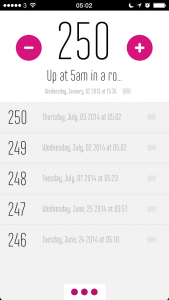
Actually, this is becoming a theme day. I write the most and I think I write my best when I get up at 5am in the morning – and today is the 250th day I’ve done that.  Plus I’ve mentioned before that there is a single quiet moment for me on Christmas Eve that I look forward to. And now I read this in Psychology Today:

Creating pockets of solitude is a powerful way to refuel and energize your life. Make it a priority. Build it in. You’ll feel better and more equipped to manage the challenges of your day.

5 Ways to Find Quiet in a Chaotic Day – Polly Campbell, Psychology Today (10 December 2013)

That’s an article in the site’s Imperfect Spirituality section and, just as an aside, isn’t the internet great? I’m not a spiritual person, I have no faith, I wouldn’t have looked in this section at all. Wouldn’t have occurred to me that I’d find anything there of interest. But a noodling Google search as I felt for this issue that’s been on my mind today, led to this. I like it.

…My ability to be well in this world is dependent on a certain amount of solitude. It’s where I find my balance.

It’s good for all of us: Solitude is the root of innovation and creativity. It is restorative. Quiet time eases stress and promotes relaxation and concentration. Often it fosters greater appreciation for others and enhances social relationships. It also delivers a dose of perspective and helps us become better problem solvers.

Campbell talks a little about the benefits but then acknowledges how hard it is to get this type of quiet time and gives plenty of advice about it. Examples:

There are only two (and-a-half) rules: Be alone. Be quiet. And here’s the half – be still at least part of the time. A quiet walk, gardening alone in the silence, cooking alone without music or the television are all powerful ways to access your alone time. But it’s also important to just stop doing, to be still and to notice what comes up.

Here are five other tips that can help you carve out a few moments of quiet in your day:

1. Plan for it. Ask for it. My husband is always willing to help me find time because he knows now that most times, an hour or two to myself each week (more if you can get it) keeps me from becoming a raging, crazy woman.

2. Make it a priority. Like brushing your teeth or taking a shower, 10 minutes of quiet time a day packs health benefits that will contribute to your peace and well-being. This is not a luxury. It is part of taking care of your body and cultivating your spirit and it’s just as important as eating vegetables and working out.

Read the full piece for much more.

Work while you sleep

Sounds perfect: where do I sign up? Sleep is for tortoises, except at 5am in the morning when only the insane are up, alongside the nightshift, suffering parents and all farmers.

From The Muse:

…What if you didn’t have to say goodbye to sleep in order to be productive? What if you could utilize your sleeping hours to actually get chores and tasks done?

8 Ways to Get More Done While You Sleep – Catherine Jessen, The Muse (12 June 2014)

I’m listening. Go on.

We decided that you should be able to be productive while you sleep, so we’ve rounded up these eight awesome links that will inspire you to dive under those covers and catch come Z’s (while still getting stuff done).

O-kay… and an example? Give me one example of the 8.

1. Develop creative solutions by allowing the intrinsic part of your brain’s pattern recognition systems to assess what it saw during the day and spit out innovative answers in the morning.

2. Do you need to remember something important? Studies show that we can reinforce existing memories during deep sleep. Make sure you’ve already reviewed or learned the material you want to memorize at least once before conking out.

3. Make money while you sleep by siphoning off a portion of your paycheck into an account where it can grow thanks to compound interest.

That’s three, but thanks. The last one is specific and financial, the first is a psychology way of saying give it a rest and the second is the kind of optimistic thinking I employ the night before a deadline. But each one of these and the other five tips is really just a heading and then includes a link out to more detail and more research. Do give the full piece a read, then.

Quick fixes for a slow Mac

spinning beachballIf you’re getting that wretched beach ball it means your Mac is struggling – and you’re getting it while doing something as intensive as just opening a folder – then do this:

1) Quit your browser
Especially if you’re not actually using it. And especially, most especially, three times most especially if you the sort to leave a lot of windows and tabs open. Each one is taking up some effort from your Mac as it tries to keep each one updated all the time.

For your own sanity, get into the habit of closing a tab when you’re done with it. Bookmark it if you’re going to come back to it later, but close it now.

In the meantime, though, quitting the browser is a one-click device for speeding up your Mac.

2) Delete things and then empty the trash
I believe the general consensus is that you need to keep about 10% of your hard disk space clear in order for your Mac to work away merrily. (Because it uses some space as it’s going.) If you can possibly do it, go for a third instead.

It makes the most enormous difference, says William who this morning found he had 200Mb of space left on his MacBook Pro’s 250Gb drive. Which Wolfam Alpha tells me is 0.08%.

Yep, I beach balled a lot this morning.

The 5am anniversary

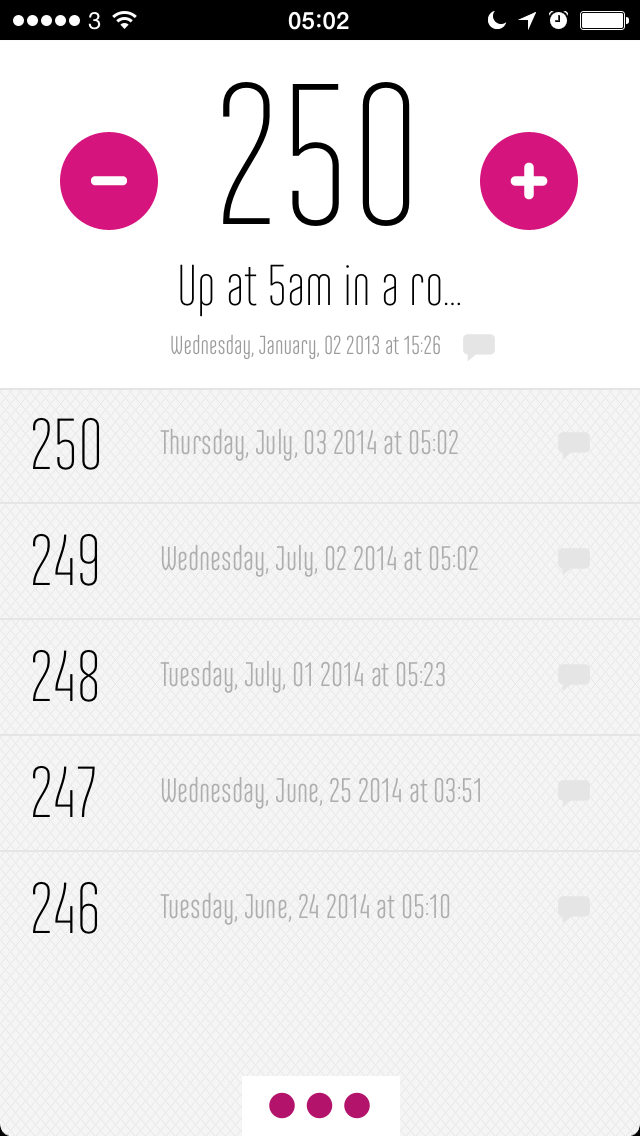
Today is the 250th day I’ve got up at 5am to write. That doesn’t feel like much given how long I’ve been a writer and it will feel feeble if you’re a farmer. But I want to mark this little anniversary in some way.

I only just thought of that this morning as I lurched very slowly out of bed. Yesterday I fair bound up out of there, today was tougher. Perhaps I should’ve kept a record but very broadly I think the 240s have been some of the hardest since the very first 5am starts.

It definitely goes in cycles, though.

There were patches even during the 20s and 30s where I would bound upright and not think about all this. There were times somewhere around 80 mornings in that I would come close to turning over.

I don’t think you need my sleep diary, if I had one, but the 5am start idea was difficult for me and I don’t think that even I can find a way to say I’ve failed at it. So there is discipline, there is effort, there are lessons.

But most of all there are results.

That’s why I do this thing. I’m not advocating getting up early as some kind of health advice. Look at me: I don’t know from health advice. And I’m not even recommending that you get up at 5am per se. What I did before all this began was to experiment with looking for when I wrote the best. Also the most, I was on various deadlines so most was an important issue, but chiefly the best. When did I write the best and preferably not have to rewrite quite so much.

It’s just an astonishingly awful thing that the answer is 5am.

But, okay, at least I know.

And now, 250 mornings in, I know these things too:

1) Bribery and threats
For the first 180 days I used my own Brutal £1 Pot Trick (as covered in my book, The Blank Screen, UK edition, US edition) to trick me into getting up. (The short summary is that I did bribe myself each morning but I also threatened. There was a treat for doing it but also a very big penalty for not.) I’d probably carry on using this, I had intended to and lately I’ve wondered whether it would help to try again, but it’s an expensive kind of thing and I wanted an iPad.

2) Alarms
I love my iPhone but there are times I hate my iPhone. Specifically at 5am. Or rather at about 6:30am when I’d wake up feeling great, feeling refreshed, feeling amazed that I could be so renewed and reinvigorated by a night’s sleep that was ending at 5am. And then seeing that my iPhone’s alarm was going off.

The alarm has to be very quiet so that I’m the only one it wakes, being right on top of it and able to switch it off quickly, but it does have to make a noise and sometimes it doesn’t. Not because I’d turned the volume down too low, not because I’d switched some setting.

Just because.

Yes, I had a moment of worrying about deafness. There was the screen with its Snooze button on that white alarm banner, but no sound.

After this had happened a few times – I have no idea what caused it, there’s no pattern I could see – I gave up setting an alarm for 5am.

Instead, when I’m going to bed, I ask Siri to wake me at 4:59am. And then to wake me at 5:01am. Two alarms. Many days they both work, just once or twice neither has. And for the rest of the time, one of them has and that’s enough.
kount3) It’s worth counting
I often forget until hours later, but just tapping a + on a counter app is a little bit satisfying. If it’s a choice between the satisfaction of a tap and the joy of another hour in bed, the bed wins. Let’s be clear there. But as it’s really a choice between bed and all the benefits that getting up early bring, the counter wins.

4) Do something. Have something to do
It’s like laying out your clothes the night before. Have something that you are going to do first. You won’t always do it. Right now, I’m not doing it. I had a plan for what I need to do and instead I’ve come to you. But this isn’t about the discipline of making plans and sticking to them. I get up at 5am, that’s discipline enough for anybody. It’s about using this Stupid O’Clock time and making it count.

Doing anything is fine. But it must be done. Easily the worst mornings of this whole 250 run are the couple where I had nothing to do. I had plenty I could do but nothing that was vital, nothing that made me ill with worry.

It was truly, deeply, insanely awful.

There is just little so stupid as wasting time at your desk at 5am. You don’t even spend some time deciding what to work on, you start checking emails and reading news.

So if there is not a particularly pressing deadline already, I will choose something the night before and make it the thing I will work on first. The aim is to get straight to the keys, to do the fastest shower in Christendom (I often re-shower later), get some tea (I definitely re-tea later) and start writing.

Today for example, I made a note in OmniFocus that I would finish a short story I’ve been commissioned to do. Hello. This is not a short story. This is you and I talking. But it is me writing and that is the sole aim of getting up at this time.

It’s a simple aim but it works for me and I find it very difficult. So, nuts to it: today is my 250th day of getting up at 5am to write and I’m proud of myself.
The only type of update you’re going to see about Aperture

It’s a weird one, isn’t it? Apple’s pulled big applications before – it ditched Final Cut Pro in favour of what was initially a much reduced Final Cut Pro X – but the death of its photo software Aperture is odd. Apple didn’t announce this death, they just rather let it be known.

And now they’ve just rather let a little more be known. Apple has given Ars Technica an update about what will happen next. We know that Aperture and iPhoto are dead, that they will both be replaced by a new application called Photos in OS X Yosemite. And we gathered that Photos would not be a professional tool the way Aperture was. But:

Update: When asked about what Aperture-like features users can expect from the new Photos app, an Apple representative mentioned plans for professional-grade features such as image search, editing, effects, and most notably, third-party extensibility. The representative also clarified the timeframe when Aperture development will end, along with an announcement about its other Pro app offerings receiving updates today.

Apple to cease development, support of pro photo app Aperture [Updated] – Sam Machkovech, Ars Technica (original story 27 June, update 2 July 2014)

If I liked Lightroom more, maybe I’d swap to it. But this makes me think that it will be worth hanging on to see what Photos is like. Afterall, just because Apple won’t update Aperture, that doesn’t mean the copy I’ve got will stop working today.

It’s possible this isn’t serious

The Onion’s new Buzzfeed-like mocking site has a perfect deadpan article about success which I might even have linked to if it were real. I wince admitting that.

Life is short. If you wait too long to go out and do what you want with your life, you’ll never get a chance to see your dreams come true. That’s why I tell people to stop letting the fear of failure hold you back.

Take me for instance. For years, I dreamed of just reaching out and grabbing a police officer’s gun right out of its holster and running away as fast as possible, but I never even tried because I was afraid of failing. What if I wasn’t able to pull out the gun fast enough? What if the cop yelled at me? What if he caught me and sent me to jail? There seemed to be an endless number of things that could go wrong, so I never even gave things a chance to go right.

Then one day, I decided to just go for it. I saw a cop standing on a nearby street corner and he was kind of zoned out, so I snuck up on him very quietly and reached out for his gun. Was I afraid? Of course I was—but this time, I didn’t let my nerves get the better of me. I just grabbed his gun and I booked it as fast as I could.

Stop Letting The Fear Of Failure Hold You Back – Trey Pagels, self-help expert Clickhole (30 June 2014)

See how that works out for him.