Pssst… how to make millions. Yeah. Right.

SECRET! The TRUTH that Wall Street/Any Government/Somebody With Money DOESN’T WANT YOU TO KNOW.

And yet here it is. Somehow you have been chosen to get this hot tip that nobody knows about and of course it’s yours for just $99.99 or something. Always and 99c.

You get these emails, I get these emails, I’m sure we’ve both thought phrases containing words similar to ‘bollocks’ yet still they come.

Trent Hamm has a good piece on The Simple Dollar about why we keep being drawn to these – and knowing something about that helps us avoid them.


Have a production meeting for one

In The Blank Screen book, I argue that there are two types of meeting. I think I was wrong: I think there is or at least there could be a third type and that it is useful. To be clear, the two types were:

  • Pitch meetings where it’s all about you and your work
  • Day job meetings where it’s all about the day job

The first type is the one you want as a writer or any creative person. They are important you work to get as many of those as you can and to make each of them count. The second type is ditchwater-dull sort you are forced to have in your day job and I spend a lot of time in the book covering how you can get out of them and, since you usually can’t, what exactly you can do to make them faster and make them work and keep yourself awake.

You have to meet. But you don’t always have to meet and when you have ten people in a room doing bugger-all and getting nowhere slow, that is a gigantic waste of ten people’s time. I reckon the poster-boy worst example of this kind of thing is what I would often see at the BBC: everybody would gather for a meeting whose sole and entire purpose was for whoever ran it to tell his or her bosses that they had run this meeting.

All of this stands, all of this is true, but I forgot another type of BBC gathering: the production meeting. Sometimes called an editorial meeting. Believe it or not, I still think of them as the budget meeting – there is not one single element of them that is to do with money but that’s what these were called in Lou Grant, the show that made me a writer. (Budget Meeting was the US newspaper term for an editorial meeting and I imagine it comes from how you have a certain amount of space in a newspaper and you are budgeting this much room for that story, that much for this. Certainly these Lou Grant meetings regularly included background detail such as questions about giving this much space on the front page and continuing a story inside.)

These meetings are not about your writing work but they can be. And they are so useful that I’m embarrassed I didn’t mention them. Especially as I think you can use them yourself, you can conjure up a kind of production meeting for yourself.

Production meetings have certain things that are always the same. They are regular, for one thing. Newsrooms and news programmes tend to have them at least daily, almost invariably first thing. They are always focused on the same thing: BBC’s The One Show doubtlessly has a production meeting focused on that day’s edition. Anything that doesn’t belong or can’t go in today’s edition, doesn’t get discussed. Or probably not, anyway.

Then you have specific resources: this many people who can do this much in that time. Anything they can’t do, you don’t do – or you look for outside help, you schedule it all in some way that it becomes manageable over time.

Next, every person in the meeting brings ideas. That sounds so wishy-washy but production meeting ideas are not one-line blue-sky wouldn’t-it-be-nice-to-feature-daffodils-somehow things. They are one-line ideas that have every detail behind them that it would take to get that idea on the screen or on the page. You throw in your idea, if it isn’t liked or you can’t adapt it to one that is, it’s out. If it is or you can, you contribute exactly how it can be done. Or more likely, you just go off and do it.

Take a look at the BBC’s own requirements for ideas that get pitched at news production meetings. When ideas die, it’s a lot of wasted work. But when they fly, you’re ready to go. And the process works not just because the better ideas rise to the top in these meetings but because working at them this way gets you thinking of better ideas to pitch.

Last, production meetings almost always include some kind of diary discussion. Very broadly, there are two types of ideas discussed at a production meeting: diary items and non-diary items. There is always someone whose job it is to maintain the diary: not of where you and your colleagues are but of what is happening. I’ve worked in entertainment news so a diary I’d know would have things like press previews for this film today, that celebrity is in town Friday, this book is coming out next Thursday.

The BBC maintains the most exhaustive diary of everything that any news programme could want to know but your team knows what to take from that and your team also runs their own. Then non-diary items are everything else. If Coronation Street got cancelled, that would be news and it would never be a diary item: there’s no circumstance in which ITV would let journalists know that it will be cancelling Corrie in three weeks’ time. They could try, but you suspect the story would be written about instantaneously, don’t you?

It happens that this week I have a meeting about one event, I actually have an event, and there are some discussions about at least one other confirmed and one other possible gig for later in the year. My mind’s been going through what I need to bring to the meeting, what I need other people to agree to. And I’ve realised that my mind has been going through exactly what it used to with production meetings.

I miss them. I’ll be honest with you, I miss the rigour of having to come up with ideas, pitch them to a group and then either get them or be assigned some other idea to do my best with.

And it occurs to me that I could, perhaps I should, and probably I shall run some little production meetings of my own. Just for me. God, that sounds lonely and pathetic. But I think it might be useful.

I have diary and non-diary items to get done, for instance. This week should be devoted to the events but actually it can’t be, I have to do other things too so I have issues of resources and time.

I also have the shape of the week. When you work in radio or television you are conscious of time in a slightly different way: you think about the top of the hour, you think about your third-hour guest. You know you have to have a news bulletin at this point, you know you should start the show with a bang and that it would be good to finish with one too. I have the week where I know when my events are so I know what has to come before those, I know what I will have to postpone until afterwards.

And I know all this because my noggin’ just worked it all out while I was talking to you. So thank you for that – and I hope you find production meetings useful for your work too.

Put – the – PC – down and let’s talk about this

Want.

Admit it: Sometimes you just want to punch your PC, or slap your smartphone, or knock your notebook.

We all get riled by technology once in a while, with all those feeble batteries, endless updates and spinning wheels of death.

But what if our devices could see it coming? What if they could pick up the tics and tells of our brewing anger — or, for that matter, any other emotion — and respond accordingly?

It’s not as crazy as it sounds. To hear experts tell it, this is where technology is going. Researchers and companies are already starting to employ sensors that try to read and respond to our feelings.

Devices that Know How We Really Fee – New York Times (May 4, 2014)

In space, no one can hear you snore

astronaut-outer-space-moon-nasa-astronauts-free-208100Astronauts have a bad time sleeping, apparently. Such a bad time that it affects their work. And as I am still doing this ridiculous getting up to work at 5am and collapsing asleep at any time from about 5:05am to midnight, I’m seeing some of these problems myself. If you have similar problems, this may help. If you haven’t, if you sleep like a lamb with an electric blanket, read it as a somewhat dull episode of Star Trek:

…cosmonaut Valentin Lebedev reported in his diary that he had a tendency to make mistakes on days following an unusually late bedtime; on one occasion he took fifty Earth-observation photographs through a closed porthole before realizing his error.

Four Things Astronauts Can Teach You About a Good Night’s Sleep – Barking Up the Wrong Tree

Writer Eric Barker is quoting there from a book called Bold Endeavors: Lessons from Polar and Space Exploration and says first that NASA took some notice – and, second, that the issues that cause these problems are now ones affecting us all. Astronauts no longer have sunrise and sunset, they don’t have day and night or at least they get a lot of them, an awful lot of them, as they whip around the planet. Quoting The Paleo Manifesto: Ancient Wisdom for Lifelong Health:

Today our bodies have become thoroughly confused by the artificial signals of modern life. Light is no longer a cyclical function of the sun, but of always-on indoor lights, TV screens, and computer monitors. Temperature no longer follows a dynamic cycle of cooling at night and warming during the day but sits at a static level set by the thermostat. Human chatter and social interaction used to follow a natural ebb and flow, but now we are more likely to live and sleep in isolation from real people, even while we have 24/7 access to artificial people (faces on TV, voices on the radio). Then, after utterly confusing our circadian rhythm, we try to take back control with stimulants (caffeine, nicotine) and depressants (alcohol, sleeping pills). Is it any wonder that a third of Americans are chronically sleep-deprived?

Barker himself suggests some solutions:

Maintain a consistent schedule, even on weekends. Keep in mind the “free-running” problem. Your body will push later if given the chance.
Take an hour to wind down before bed. Yes, you’re busy. But your time is not more precious than an astronaut’s. So take the time to wind down.

He has more in the full and deliciously link-replete article that will have you off reading in deep corners of the internet.

Rock, paper, scissors, lizard, Spock

This goes back a ways. Even in Yes, Minister from the 1980s, we were told that the way to win is to “play the man, not the ball”. Rather than try to actually win the game, instead make the other fella lose. Understand your opponent. There’s probable some Art of War element to it too. But every school kid knows that rock, paper, scissors is completely fair and cannot be beaten, that you cannot work out a strategy, you can’t guarantee to win.

But you can.

Probably.

Just as Sheldon Cooper invariably chooses Spock in the extended rock, paper, scissors, lizard, Spock version of the game in The Big Bang Theory, so researchers have demonstrated that we make similar choices in similar situations:

A group of researchers from Chinese universities have written a paper about the role of psychology in winning (or losing) at rock-paper-scissors. After studying how players change or keep their strategies during multiple-round sessions, they figured out a basic rule that people tend to play by that could potentially be exploited.

Scientists find a winning strategy for rock-paper-scissors – Ars Technica (May 2014)

The rule is just that if someone makes a choice that works, they stick with it next time. So in theory you can always figure out what will happen in the second round of rock, paper, scissors. No use to you if everything was decided on the first go.

I have a continuing problem with this being called science when it feels more like statistics but the argument is that it is psychology. And that therefore understanding the psychology helps you beat your opponent.

I have a continuing problem with beating your opponent. It’s not that often that I have opponents, it’s much more often that I am my own one. So I read this full feature and I think about how it means I can prevent myself being predictable. And I read this full feature and it puts me in mind of The Big Bang Theory like this:


It’s the way you tell ’em

I’ve been a TV historian – as in, I write articles and books about television history, not as in I’m Michael Wood – and it’s been a problem with my writing. I was in a script meeting where a fella wanted me to do a scene in a certain way and I couldn’t because I’d already seen it in TV dramas. A lot. I mean, a lot. To me, it was a roll-your-eyes cliché and while I wasn’t rude or stupid enough to use those words, I did make it clear that I wasn’t going to use those words.

“You know it’s been used before, but the viewers don’t,” he said.

I thought then and I think now that this is bollocks. We have all seen umpteen thousand TV dramas and maybe we didn’t all concentrate on them as much as I did, but I suspect we did. I’m trying to remember this specific scene so I can tell you and you can roll your eyes.

I thought I had to come up with something new. I was and I am aware that this is a painful thought as there is so much I haven’t seen, so much I haven’t read that the odds of my finding something genuinely new are about as high as the chance I’ll find a way to end this sentence without saying low or nonexistent.

Still, it was okay for me, I felt it was okay, if the thing I found was new to me. If it were new to me and it did something, it took me and the audience somewhere, if it meant more than its surface, if it had more to it. I believe this today.

But.

This is going to sound a bit obvious but it came to me yesterday like I was on a bus to Damascus.

You can take an old idea and find something new in it.

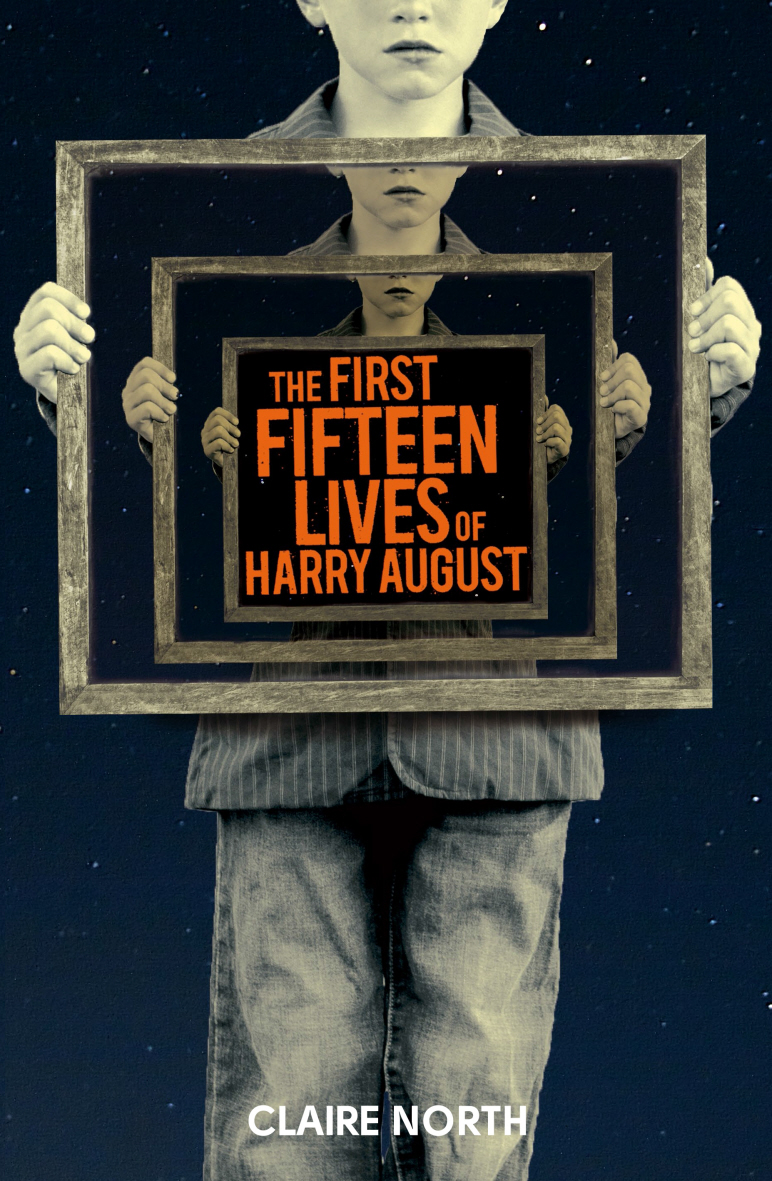
harryaugustcoverFollow. Yesterday morning I was reading through my Google Alerts and there was reference to a new novel called The First Fifteen Lives of Harry August. By the time I’d read the reference, I’d got the sample chapters off iBooks and by the time I’d read those, I’d bought the novel, and by the time yesterday was over, I’d finished reading it. Some 400-odd pages during the day. This may be the least productive I have ever been, and as I’m the laziest man you’ll ever meet, that is indeed saying something.

The First Fifteen Lives of Harry August is about a man who dies after a reasonably long life and is immediately reborn right back at the start. He is the baby he was, just with a lifetime’s knowledge. And then many years later, he dies again – and is right back at the start, right back to being the baby he was. Just with two lifetimes of knowledge and experience.

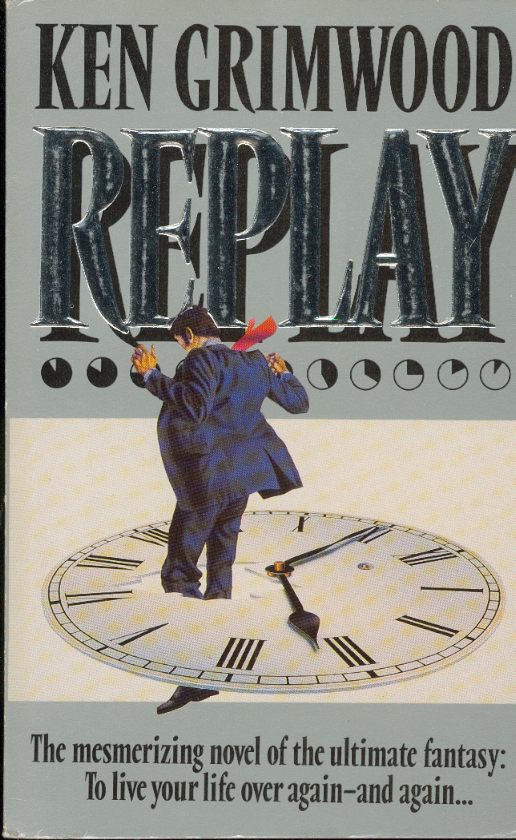
It’s an interesting idea and you can see a lot of drama potential, but the reason I got the sample rather than going straight to buying the whole book was that I knew that idea already. It’s Replay by Ken Grimwood.

replayThis reborn as yourself idea isn’t so common that you roll your eyes, it isn’t one that crops up every two years in EastEnders. But it is extremely distinctive. If you’ve ever read Replay, it’s stuck with you and you’re going to think of it when you hear of this new novel.

But apart from this one, gigantic, unmistakeable same idea at the start, Harry August has a second gigantic idea. One that could not work without the first one. It’s this. As he’s coming to the end of his life in the 1990s, he meets someone else going through this born-die-born cycle. But as he’s a dying old man, she is a little girl. And she has a message she needs him to take back to when he was born in 1918.

That idea could not exist without the same Replay-style idea at the heart of the book and it makes this a totally different – and I’m going to say totally new – type of story.

Don’t abandon things because they’ve been done before. I think that’s what I’m saying. Don’t abandon them just because they’ve been done before. But don’t do them the same, either.

Louis CK on making choices

He tells GQ Magazine, I see it on Lifehacker, I want you to know it too:

“These situations where I can’t make a choice because I’m too busy trying to envision the perfect one—that false perfectionism traps you in this painful ambivalence: If I do this, then that other thing I could have done becomes attractive. But if I go and choose the other one, the same thing happens again. It’s part of our consumer culture. People do this trying to get a DVD player or a service provider, but it also bleeds into big decisions. So my rule is that if you have someone or something that gets 70 percent approval, you just do it. ‘Cause here’s what happens. The fact that other options go away immediately brings your choice to 80. Because the pain of deciding is over.

“And,” he continues, “when you get to 80 percent, you work. You apply your knowledge, and that gets you to 85 percent! And the thing itself, especially if it’s a human being, will always reveal itself—100 percent of the time!—to be more than you thought. And that will get you to 90 percent. After that, you’re stuck at 90, but who the fuck do you think you are, a god? You got to 90 percent? It’s incredible!”

Louis C.K. Is America’s Undisputed King of Comedy – GQ magazine (May 2014)

That actually comes from page three of the interview: it’s all a good read so do start right at the top here.

sdfsf

Umberto Eco on lists

The list is the origin of culture. It’s part of the history of art and literature. What does culture want? To make infinity comprehensible. It also wants to create order — not always, but often. And how, as a human being, does one face infinity? How does one attempt to grasp the incomprehensible? Through lists, through catalogs, through collections in museums and through encyclopedias and dictionaries.

The list doesn’t destroy culture; it creates it. Wherever you look in cultural history, you will find lists. In fact, there is a dizzying array: lists of saints, armies and medicinal plants, or of treasures and book titles. Think of the nature collections of the 16th century. My novels, by the way, are full of lists.

We Like Lists Because We Don’t Want to Die – Spiegel (2009)

I can’t remember any lists in The Name of the Rose, but oh, how I loved that book. I was reading it in London when working on a magazine. Got to the Tube stop by the office and instead of going up to work, I sat on the platform to finish reading it. To finish the last 200 pages.

Anyway.

Do read more about Eco’s rather well worked out opinions on why we do To Do lists or any other kind of lists in this interview from Spiegel magazine.


Overpriced

It’s a discussion that comes up a lot. I’ve even joked about it in my book, The Blank Screen (UK edition, US edition). Every time it happens, it’s started by someone who dislikes Apple and they always say:

Macs are overpriced

And I or probably anyone who likes Apple, tells a tale something like mine:

My previous Mac lasted me seven years. I still use it for some jobs. Over that same period, X or Y replaced their PCs three times. Tell me what’s the better value.

I’m not sure which disappoints me more: the ease with which I come out with all this stuff or the ease with which people say Macs are overpriced. It’s the word overpriced: if they’d said expensive or just straight out that they cost more than PCs, I’d be nodding along with them. Well, there’s the stuff about MacBook Air knockoffs, how they still aren’t cheaper. But generally, Macs are more expensive than PCs.

It’s just that word overpriced.

That really disappoints me.

You can get a word processor for free now. So people call ones that cost £6.99 overpriced. They mean it costs more, they think it’s expensive – seriously? £6.99 for something you’ll earn your living using? – but they say overpriced. The word is used because it sounds better than calling the cheaper one cheaper. It implies a professional judgement: all things have been considered and that one is overpriced.

Anyone who disagrees has been consumed by the cult of Apple whereas you, the one making this overpriced judgement, are the sole voice of sanity.

Bollocks.

Follow:

Macs are cheaper than PCs therefore Macs are overpriced

Shoes are cheaper than cars therefore cars are overpriced

Hey, they both get you where you’re going, don’t they? But you look at that second one, you think I’m a smartarse, and you know shoes can’t do the same job as a car. That’s actually what I think when I look at the first line: PCs can’t do the same job as a Mac. You can disagree and there is every chance you will, but it doesn’t matter: that’s how I see it when I’m spending the money. All that matters is what you, specifically you, need. You’re thinking money matters too and it surely does, but:

If you love PCs and Windows, you have oodles of choice and you’re going to get a very cheap computer. I can’t see a single thing wrong with that.

If you don’t love PCs and Windows, why would you buy one? When you don’t like them, then the sole reason is price and I can see only wrong things with that. You’re choosing, you are electing to buy a computer you know you won’t like. That’s not a saving over a Mac, it is a waste of money. It’s one of the worst wastes, I think, because you then have to live with it every day you’re working.

I’m sure I’ll buy another Mac some day but when I do, I will be pricing it against what I need it for and what it will do for me. I won’t be comparing it to a PC.

I do thoroughly believe that you need to get the computer that works best for you and if that’s a PC, that’s a PC. I think I’m in a fortunate position that I’ve worked extensively with both so I know what works for me.

Buy a Mac, buy a PC, it’s completely up to you. But can we skip the bollocks about overpriced vs cheap and just get back to work?

Does anybody use Microsoft Office?

Ask a firm called Softwatch and they will wiggle their hand in that kinda, sorta, ish way. They've been esearching it and conclude in part that:

When examining the data, a clear observation is that the overall usage of the different applications is relatively low. This is extremely true with PowerPoint which is hardly being used. From our engagements with customers we have found that in most cases, the usage levels were far below what they perceived before using the service. As a general statement, these results indicate that at least 80% of Office users can move to alternative cloud based solutions.
The fact that 68% of the users don't use any application heavily lead to a conclusion that this population can be moved to alternative cloud based solutions rather easily and their Office licenses should be decommissioned. Specifically, the Inactive and Viewers populations which accounts for 29% in Excel and Word and 70%(!) in PowerPoint. It’s safe to say that these populations are the low hanging fruit for that matter.

You can already tell from reading this that Softwatch was looking at how people can be moved from the expensive Microsoft Office to alternatives such as Google's cloud ones like Google Docs.

Which is all well and good, even if one can lament the idea of any research ever being done for the hell of it instead of with an interest like this. And the results are unsurprisingly surprising: maybe companies don't realise how little their staff use the various parts of Microsoft Office, but you know that PowerPoint makes you ill.

So if you are somewhere that this data could get you where you want to go, ie away from Office, you go read how whole thing and make yourself some notes. Except, I think this is the killer fact from the report's research methodology:

The analysis is done on the three main components of the MS Office package: PowerPoint, Word and Excel. Please note that Outlook, which is commonly used by all users, is excluded from the user segmentation analysis.

If you didn't exclude Outlook, then, you'd have got a different story. To my mind, that means you got a different story.